
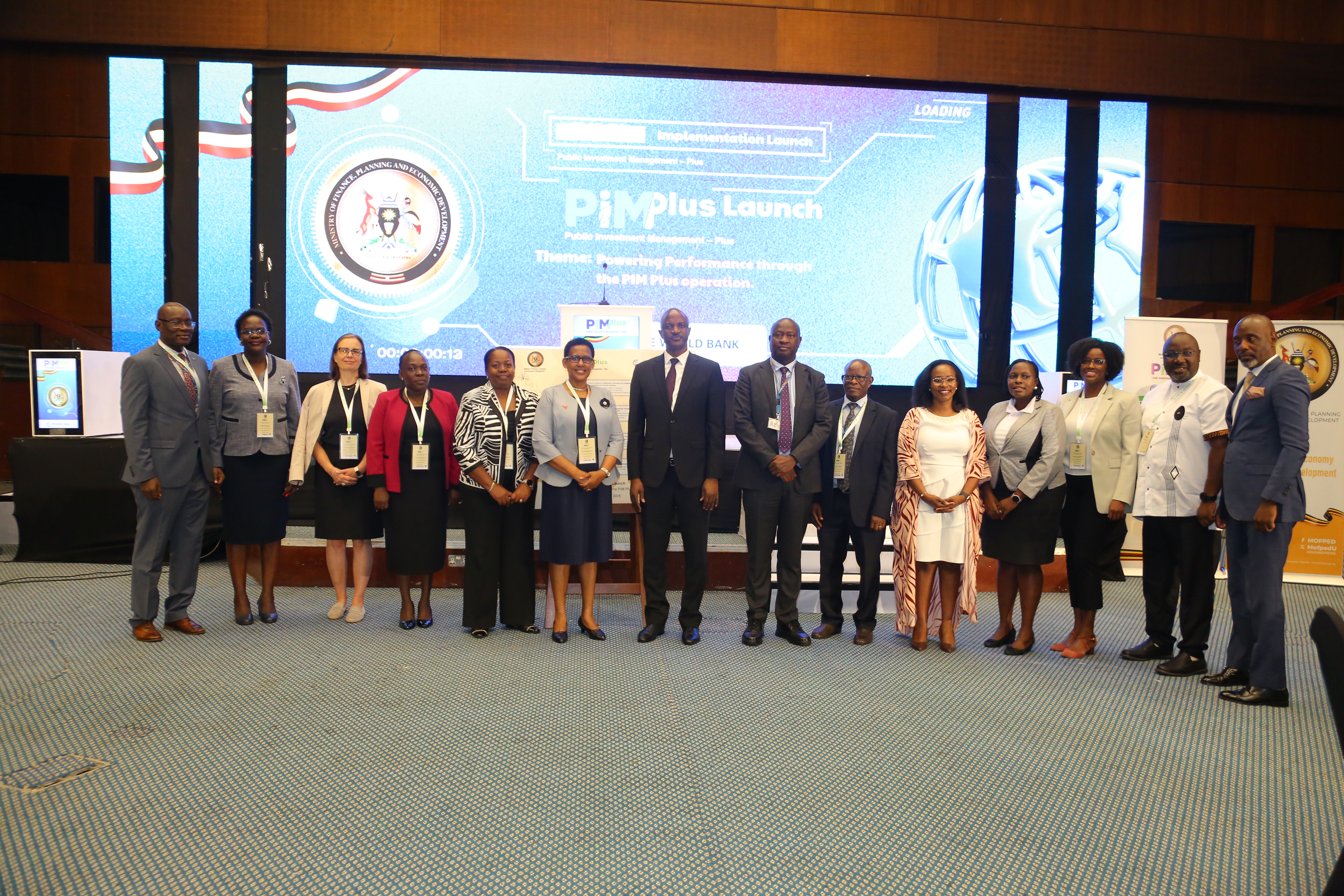
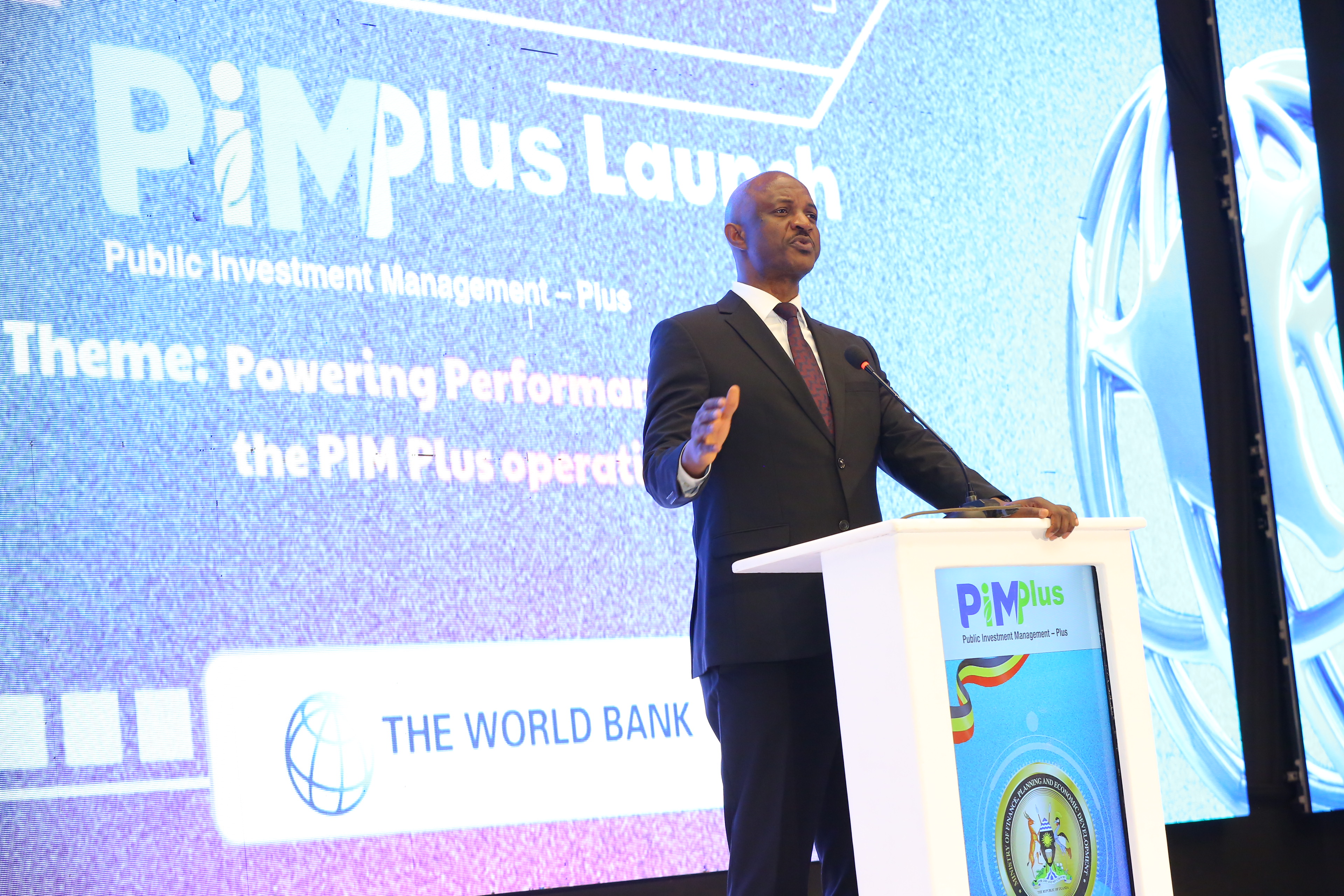
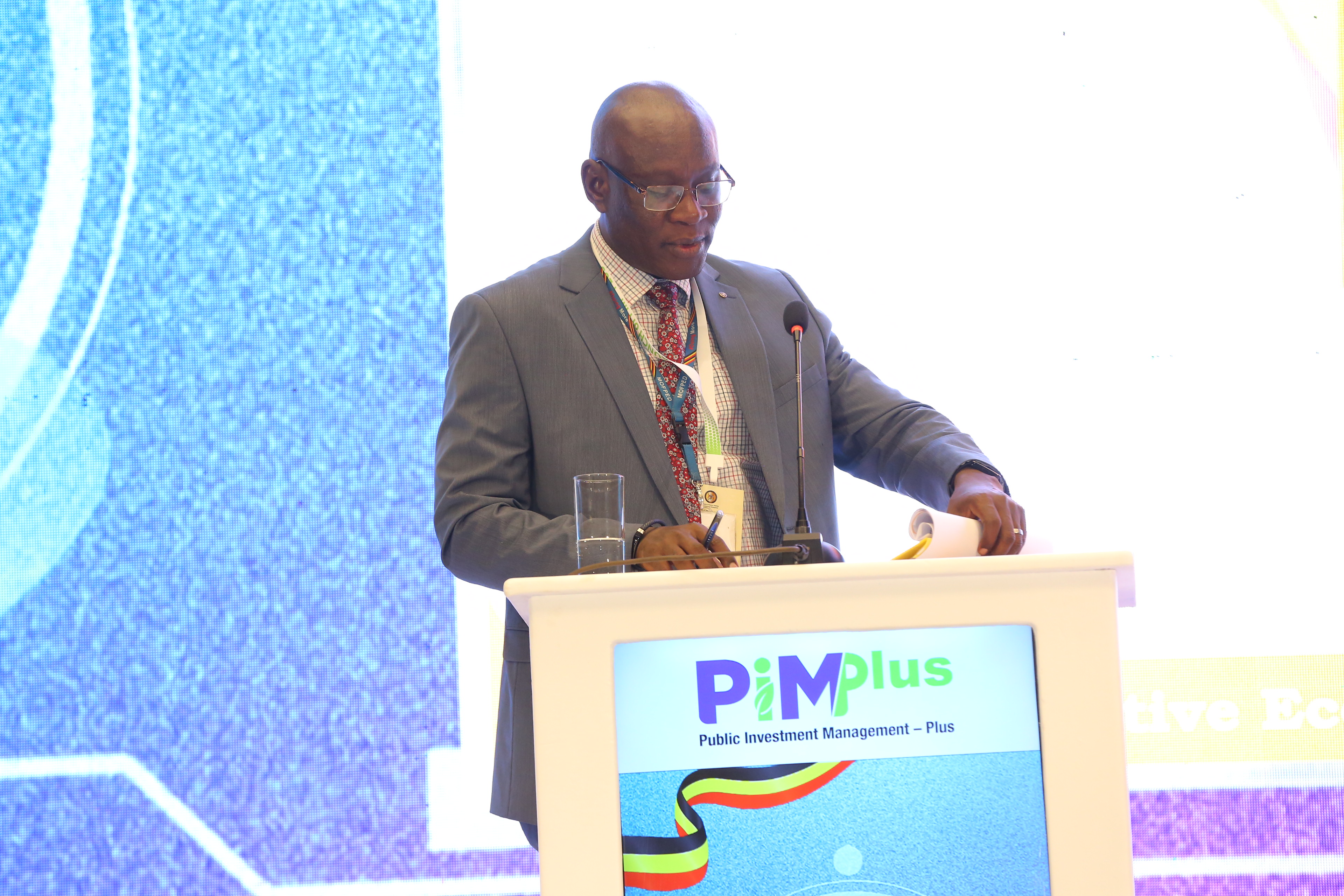
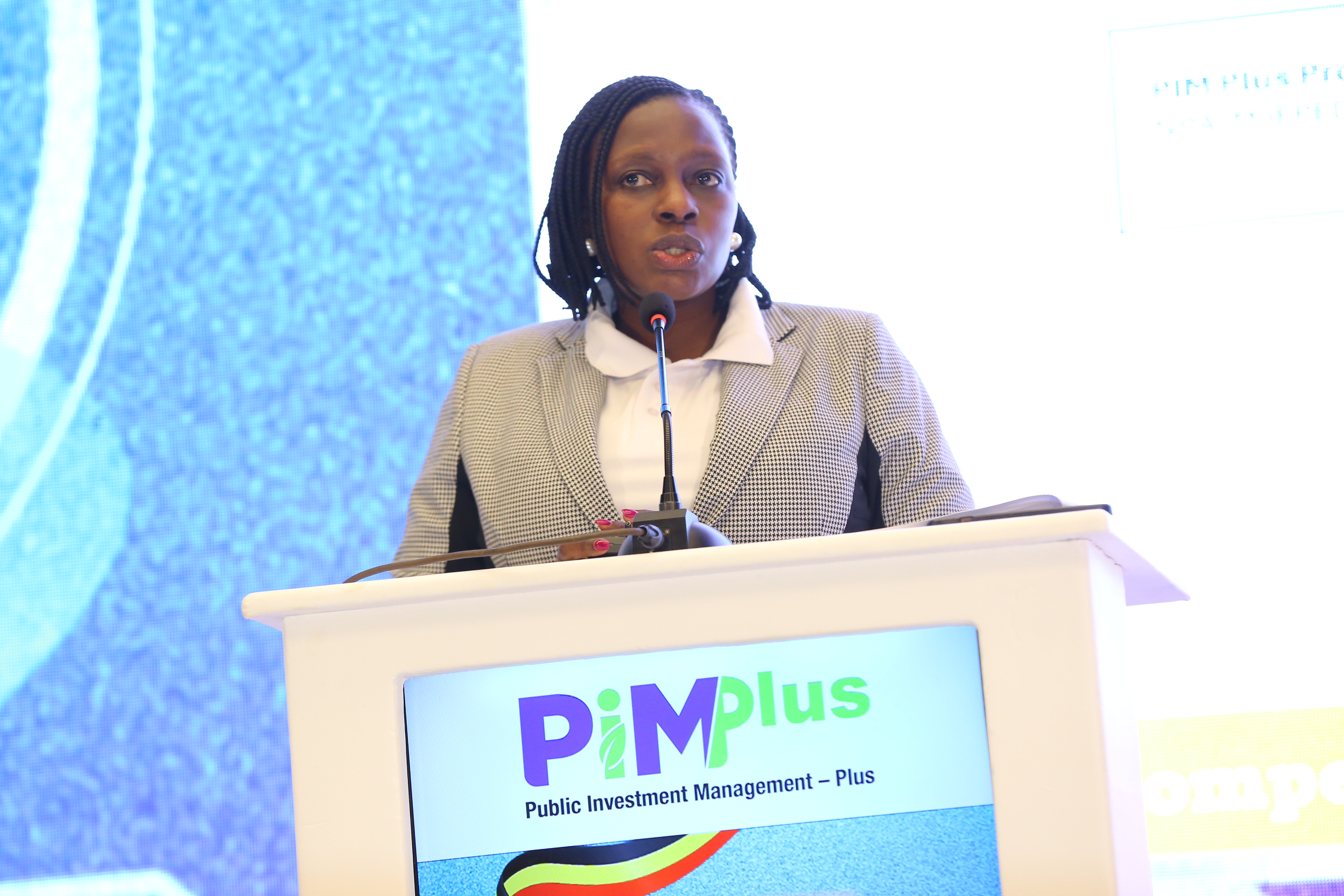
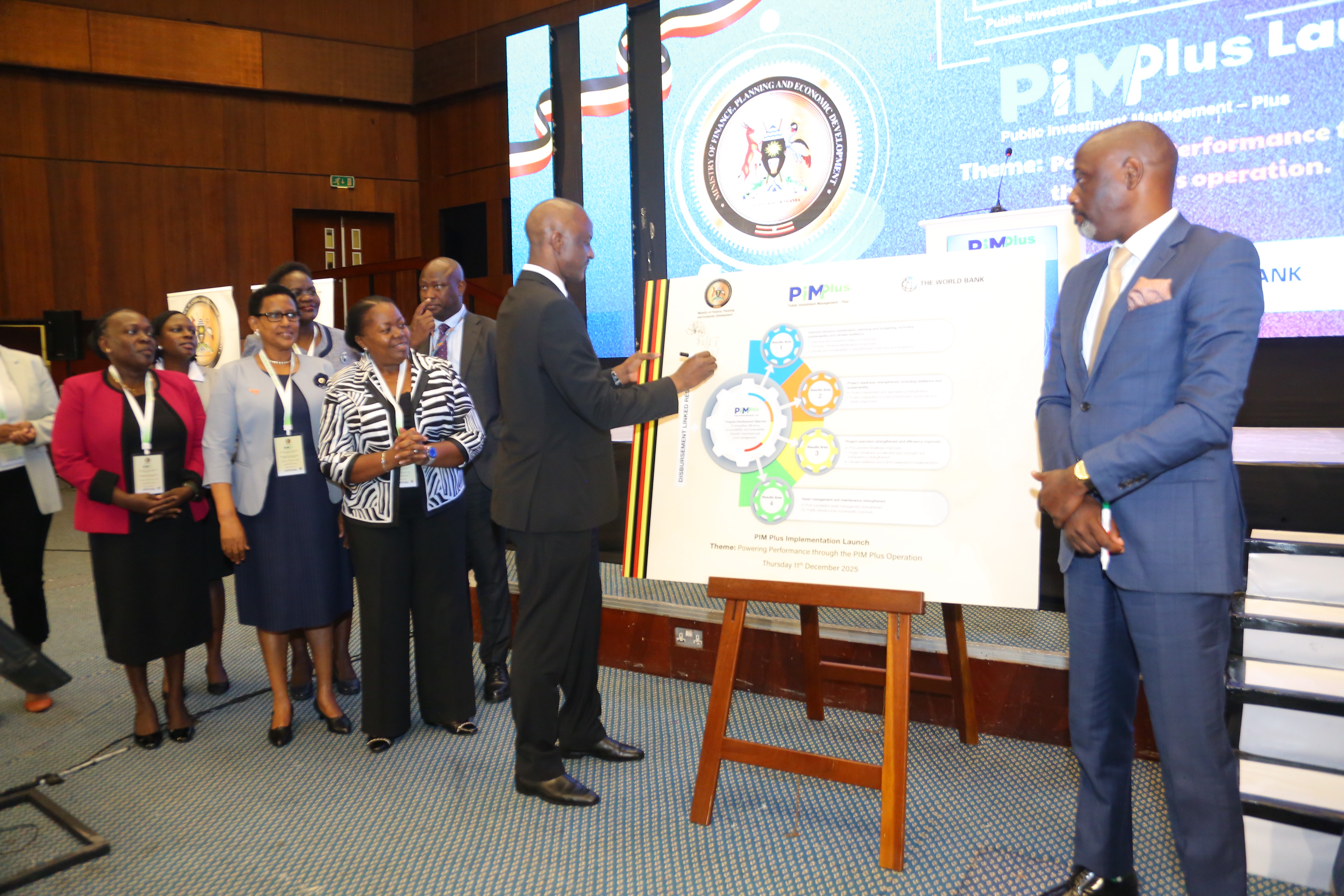
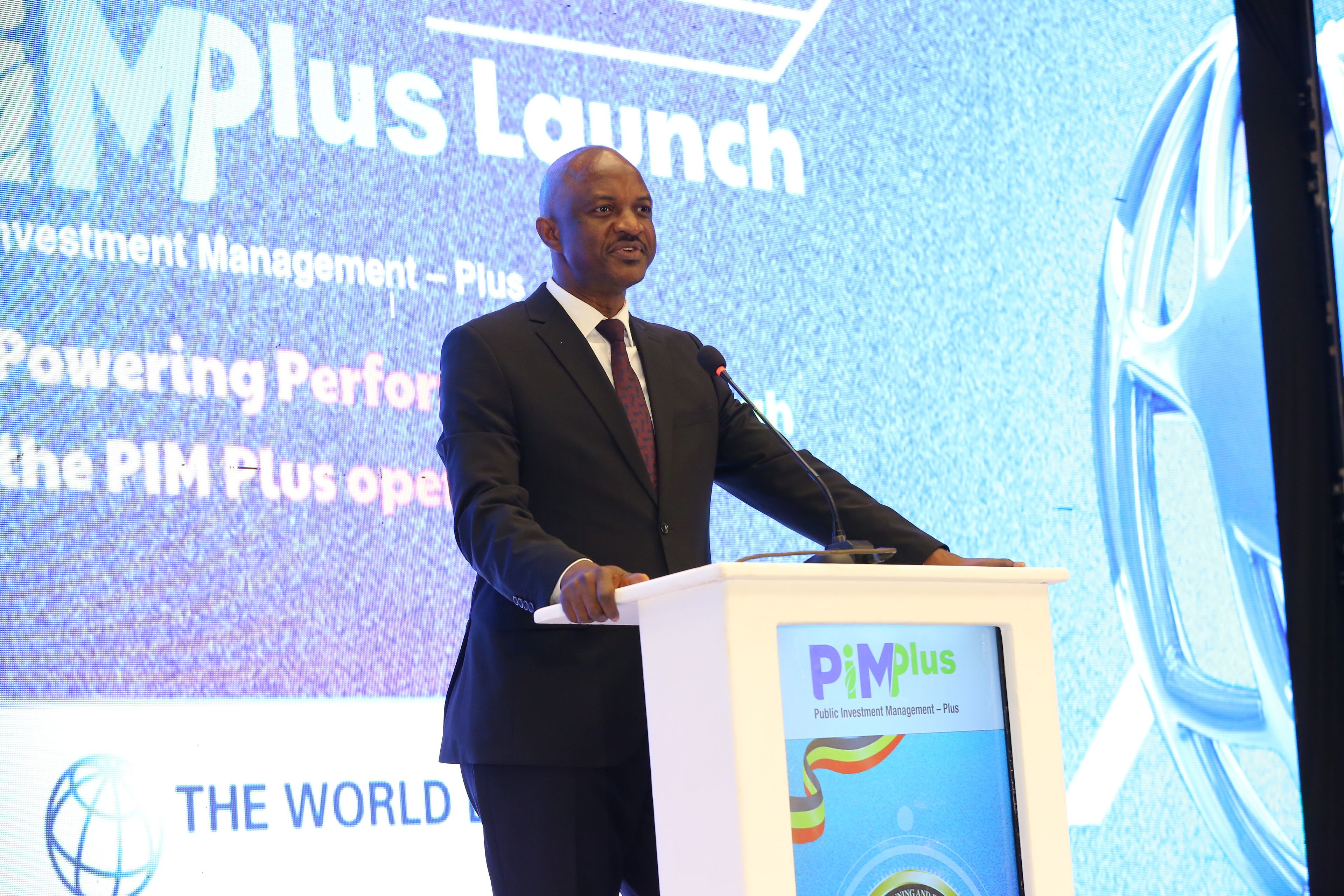
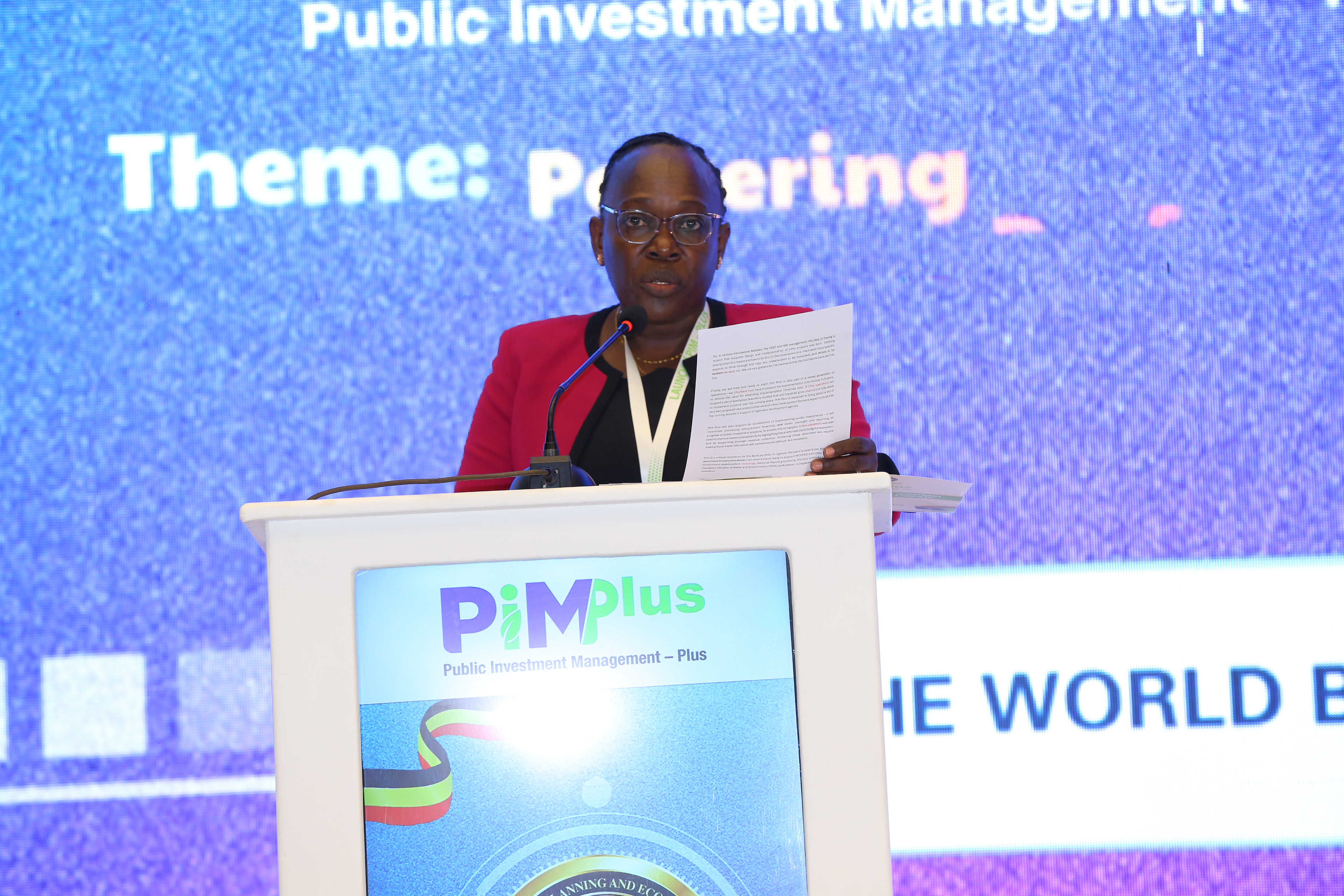
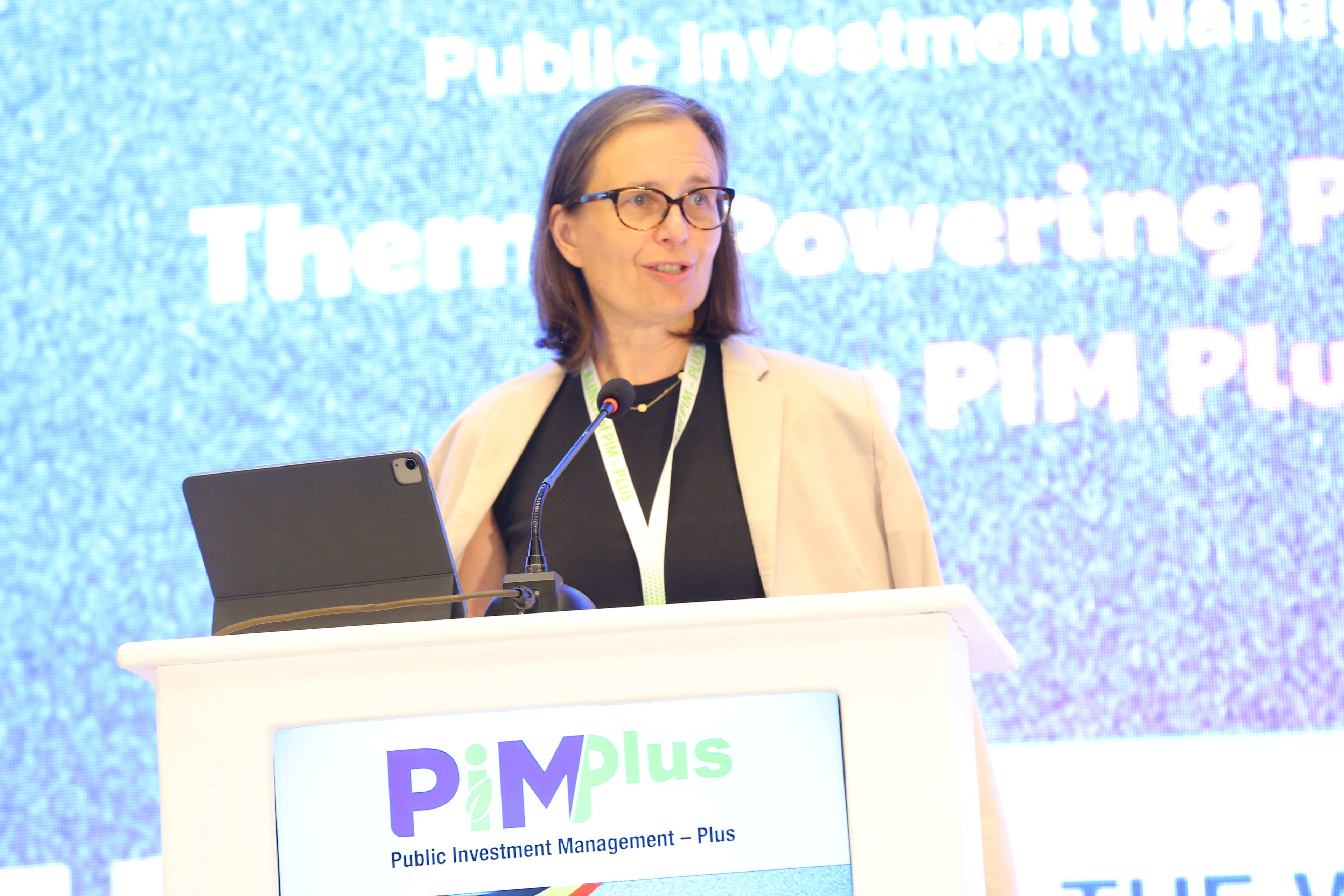
A World Bank–supported Operation strengthening the Government of Uganda’s efficiency, accountability, and sustainability in public investment and asset management, in line with NDP IV and the Tenfold Growth Strategy.

The PIM PLUS Operation is a hybrid financing arrangement supported by the World Bank (IDA Credit 7917-UG), comprising Program-for-Results (PforR) and Investment Project Financing (IPF). Implementation is guided by the Operations Implementation Manual (OIM).


A comprehensive approach to managing public investments from conception to operation


Lead and supporting implementers for the Operation’s Disbursement-Linked Indicators (DLIs).
| Result Area | DLI | Lead Implementer | Other Implementers |
|---|---|---|---|
| Result Area 1: Improve resource mobilization, planning and budgeting, including sustainability and climate resilience | DLI 1 | MFPED (PAP) | MFPED (BPED, ISSD, DARC, Cash Policy Depart) |
| DLI 2 | MFPED (Tax Policy) | URA, UIA | |
| DLI 3 | MoWE | NEMA, NPA, MoLHUD, MFPED | |
| Result Area 2: Project readiness strengthened, including resilience and sustainability | DLI 4 | MFPED (PAP) | NEMA, MWE |
| DLI 5 | NEMA | MoGLSD, MoWE, MFPED (PAP, Gender Unit) | |
| Result Area 3: Project execution strengthened and efficiency improved | DLI 6 | PPDA | MFPED (PPMD) |
| DLI 7 | MFPED (PAP) | MFPED (BMAU), NPA, Internal Auditor General | |
| DLI 8 | MoMWE | NEMA, MFPED (PAP) | |
| Result Area 4: Asset management and maintenance strengthened | DLI 9 | MFPED (AMD) | MFPED (AGO, PAP) |
| DLI 10 | MoWT | MFPED, MWE, NEMA |
| Acronym | Definition |
|---|---|
| PAP | Project Analysis and Public Investments Department |
| BPED | Budget Planning and Evaluation Department |
| PPMD | Public Procurement and Management Department |
| ISSD | Infrastructure & Social Services Department |
| DARC | Development Assistance & Regional Corporation |
| BMAU | Budget Monitoring and Accountability Unit |
| AMD | Asset Management Department |
| AGO | Accountant General's Office |
| NPA | National Planning Authority |
| NEMA | National Environment Management Authority |
| MoWE | Ministry of Water and Environment |
| MoWT | Ministry of Works and Transport |
| MoGLSD | Ministry of Gender, Labour and Social Development |
| MoLHUD | Ministry of Lands, Housing and Urban Development |
| PPDA | Public Procurement and Disposal of Public Assets Authority |
| URA | Uganda Revenue Authority |
| UIA | Uganda Investment Authority |
| OAG | Office of the Auditor General |
Uganda’s PIM system design is among the strongest in Sub-Saharan Africa; however, implementation challenges persisted, providing the rationale for the PIM PLUS Operation.
Key challenges include: system-wide implementation lags with cost and time overruns, arrears, and weak maintenance; fiscal and budgeting gaps (PIP entries exceeding fiscal space, over-commitment, counterpart funding shortfalls); project preparation weaknesses (many projects without quality feasibility work); environmental, social and gender gaps in preparation and ESIAs; limited climate integration in sector plans; procurement delays and contract management capacity constraints; and underfunded, unsystematic asset maintenance.
The Operation seeks to move from strong system design to more effective, results-oriented implementation across the full public investment lifecycle—planning and project preparation with climate resilience and environmental sustainability, timely implementation, and stronger post-completion asset management. The PAP Department at MoFPED supports PIM processes and coordinates the Operation with the RCU.
The Operation concentrates on strengthening resource mobilization and planning, enhancing project readiness, improving execution efficiency, and institutionalizing asset management across the PIM cycle.

Official publications, guidelines, and resources related to the PIM PLUS Operation and the Operations Implementation Manual (OIM).
Loading documents…
Latest news, career and procurement opportunities, and other resources from the PIM PLUS Operation. Items can be viewed and downloaded at any time.
Loading news & opportunities…
Photo albums from PIM PLUS events, ceremonies, and engagements.
Loading gallery…
Plot 2-8, Sir Apollo Kaggwa Road
P.O. Box 8147, Kampala, Uganda
PAP@finance.go.ug
GRM.PIMPLUS@finance.go.ugPlease reach us at this email in case of any issue or complaint.
Projects Analysis & Public Investment Department (PAP)