
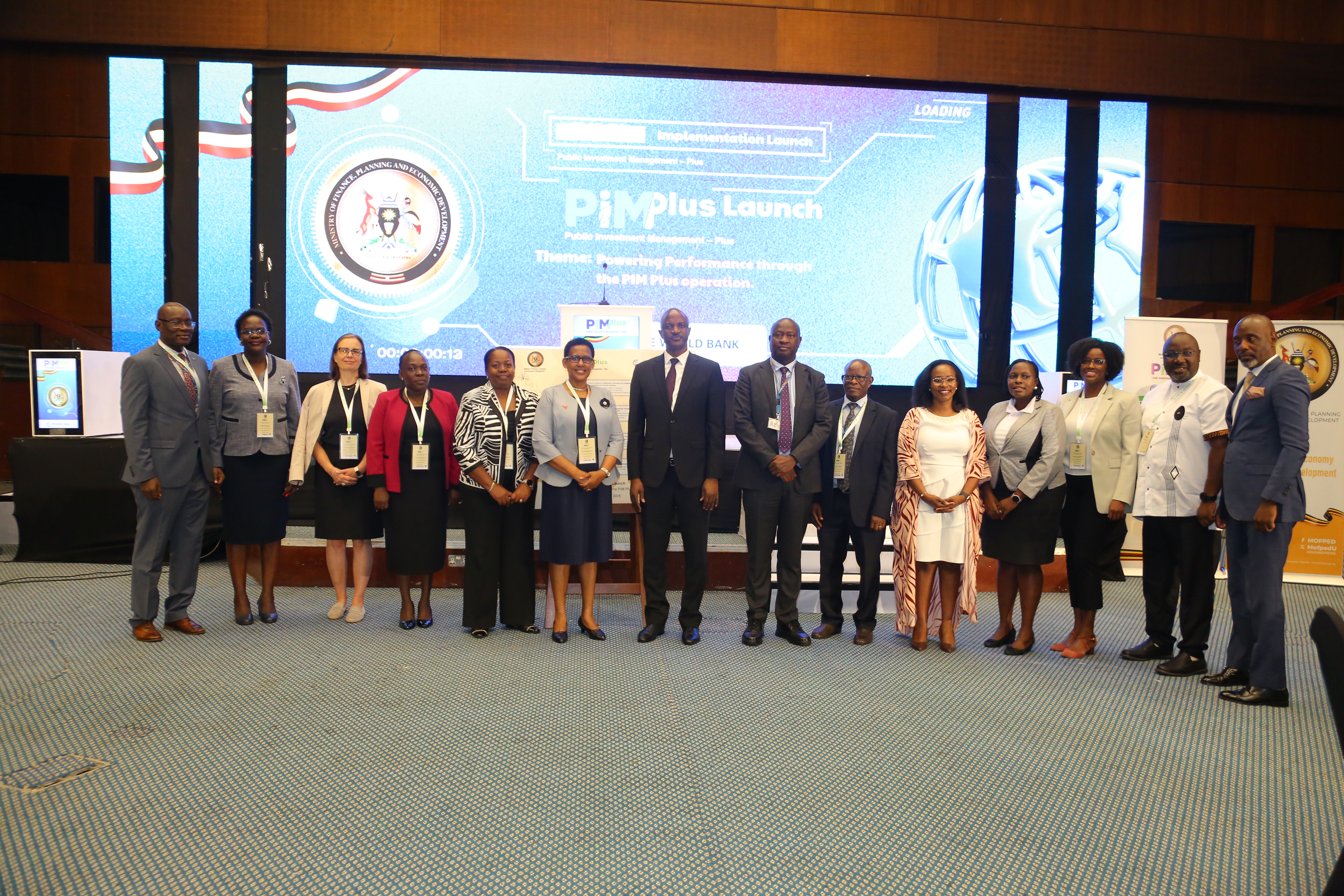
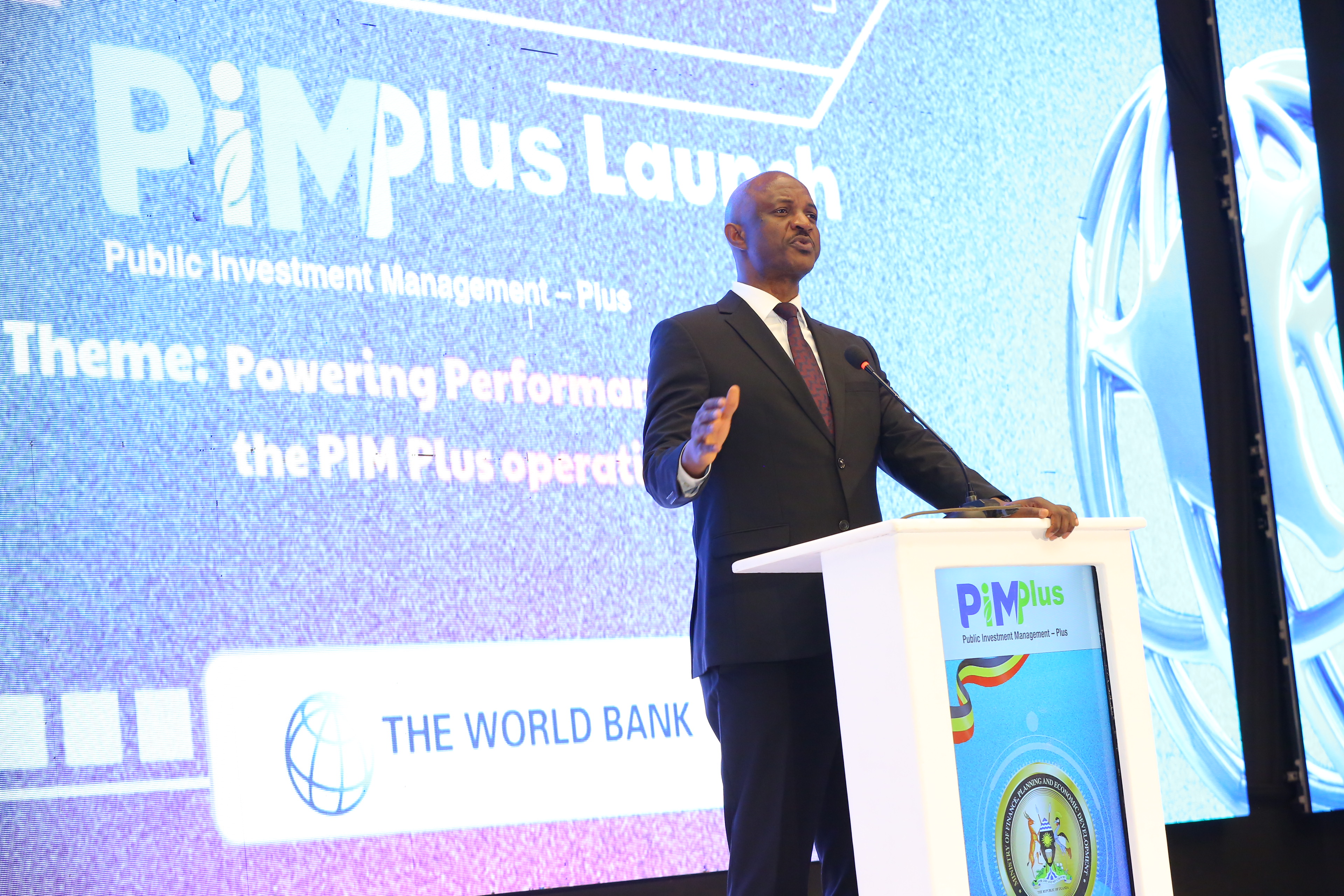
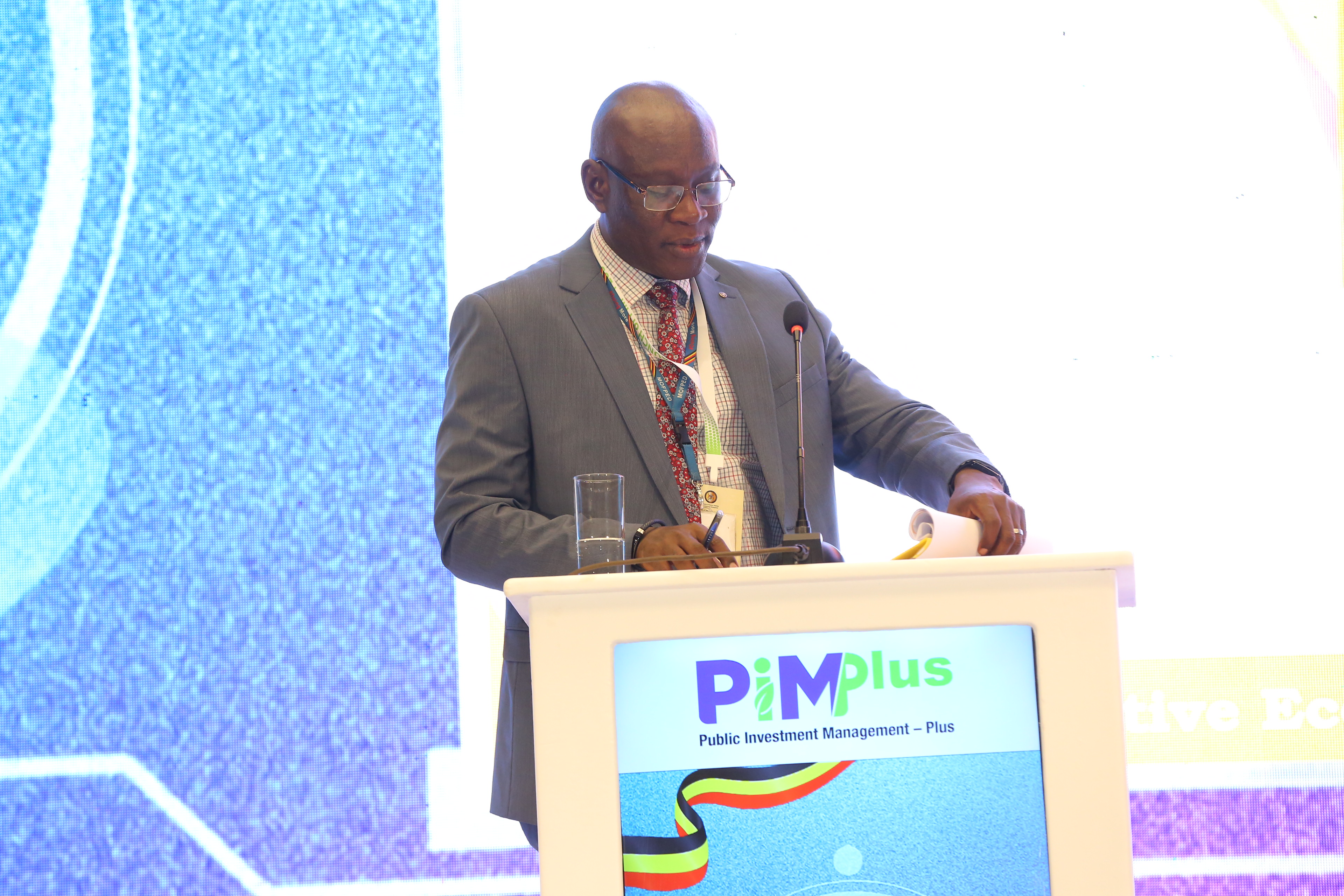
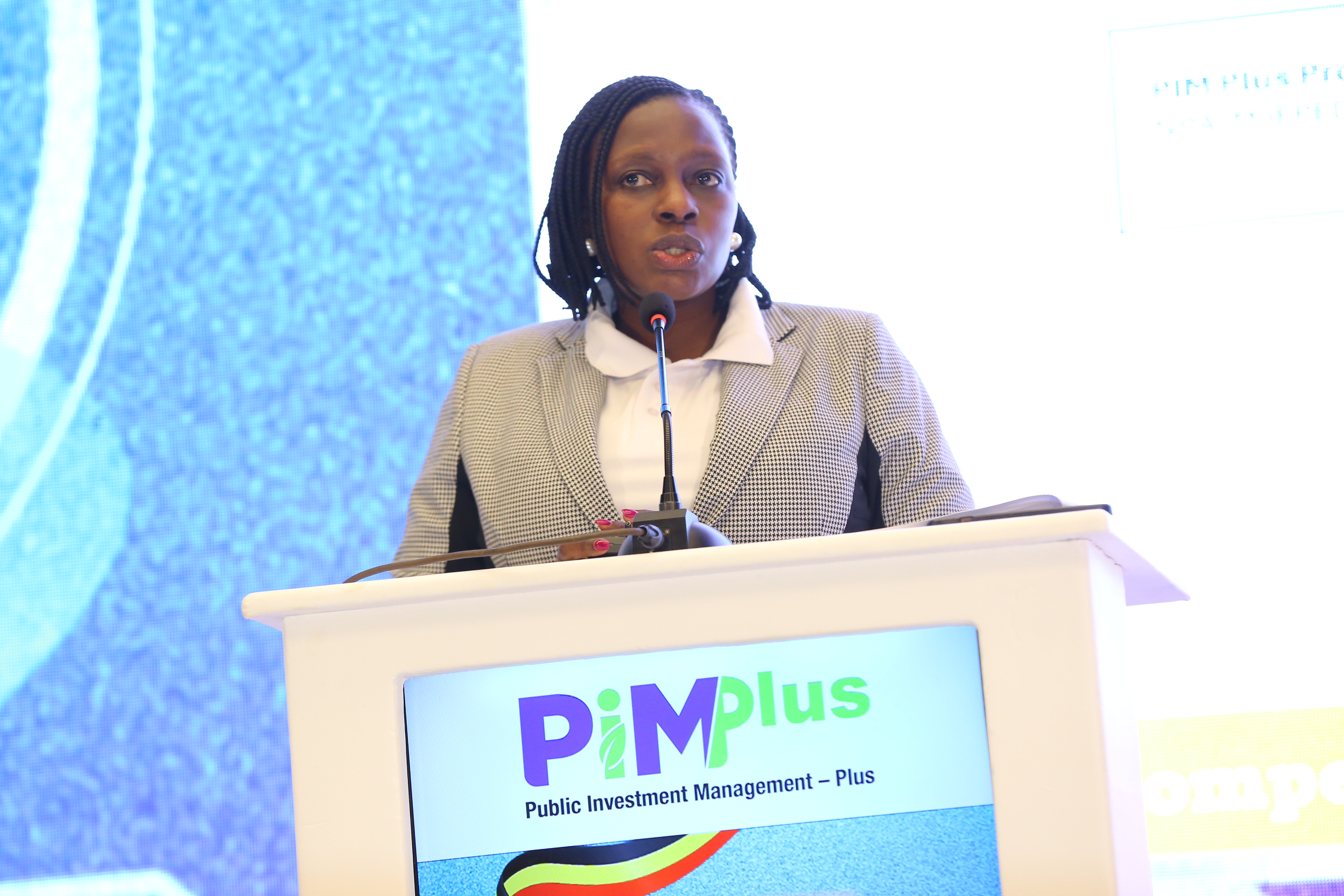
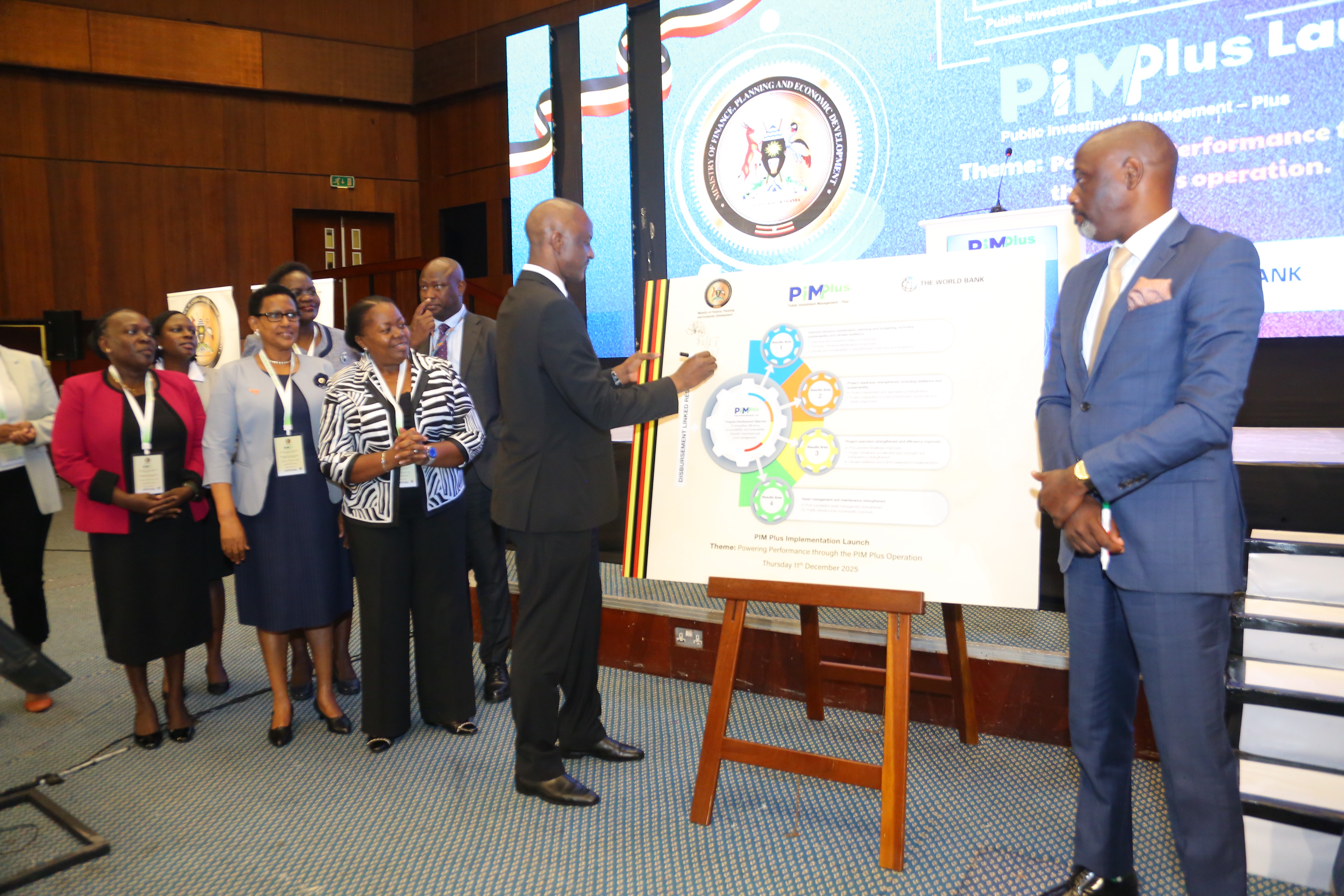
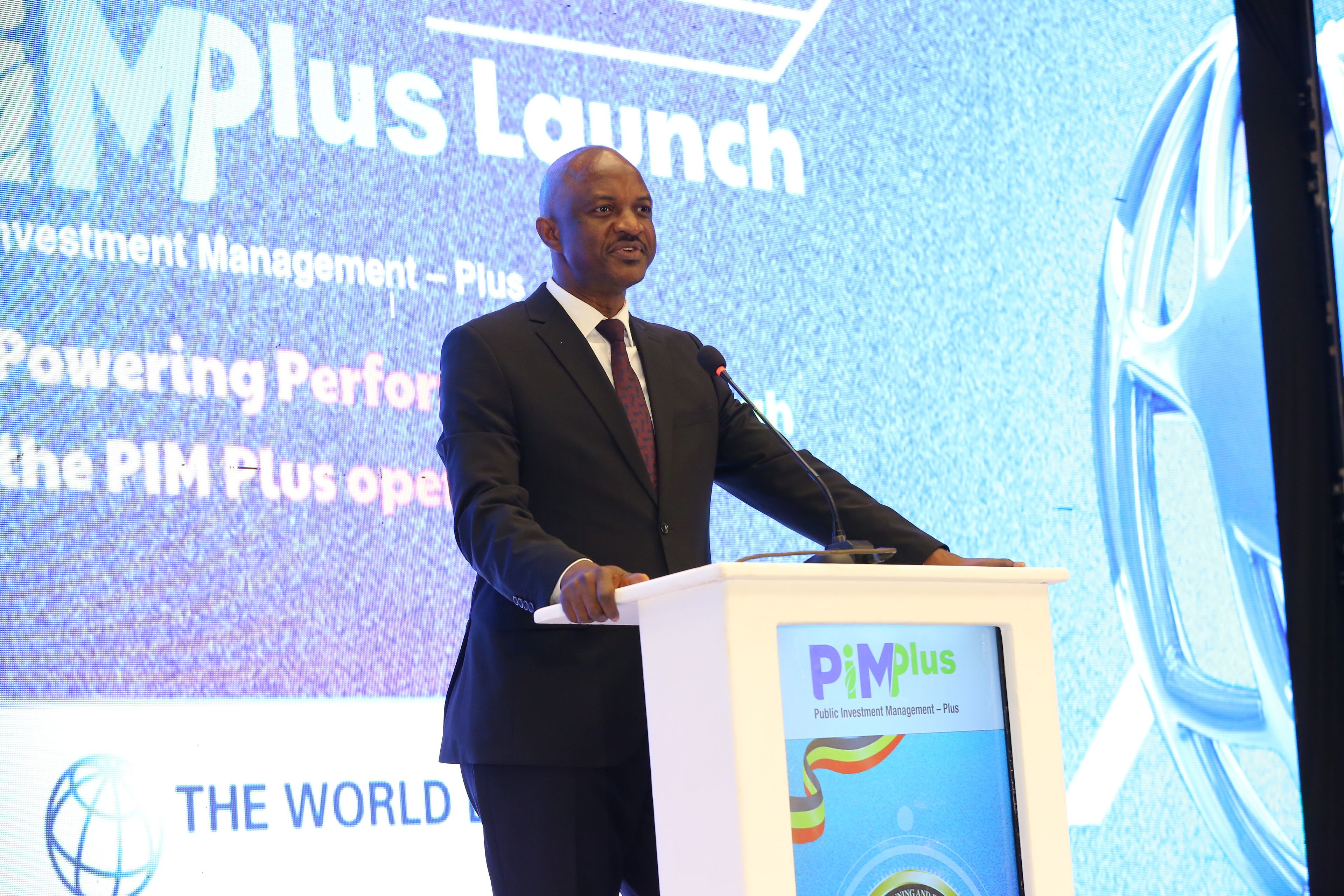
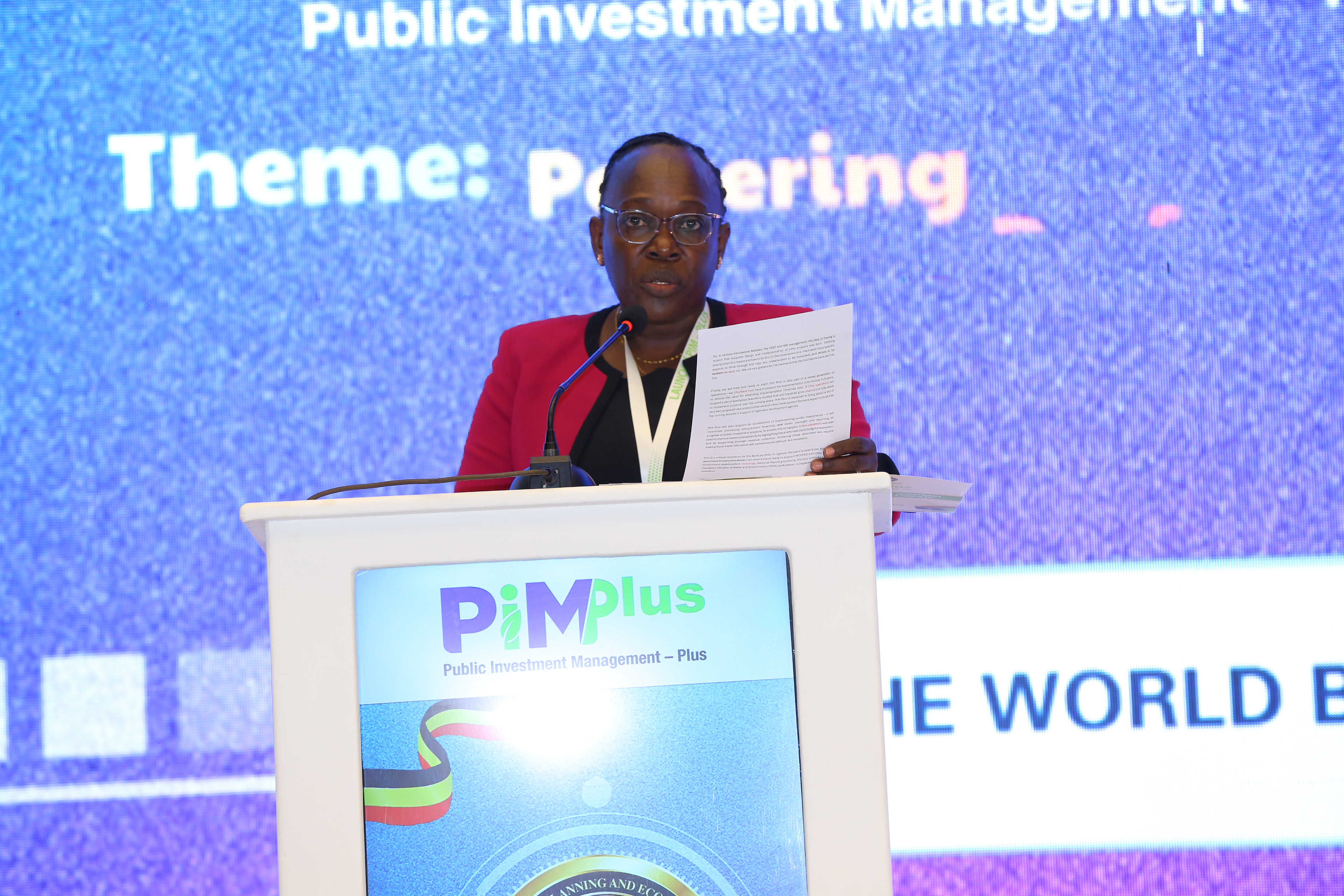
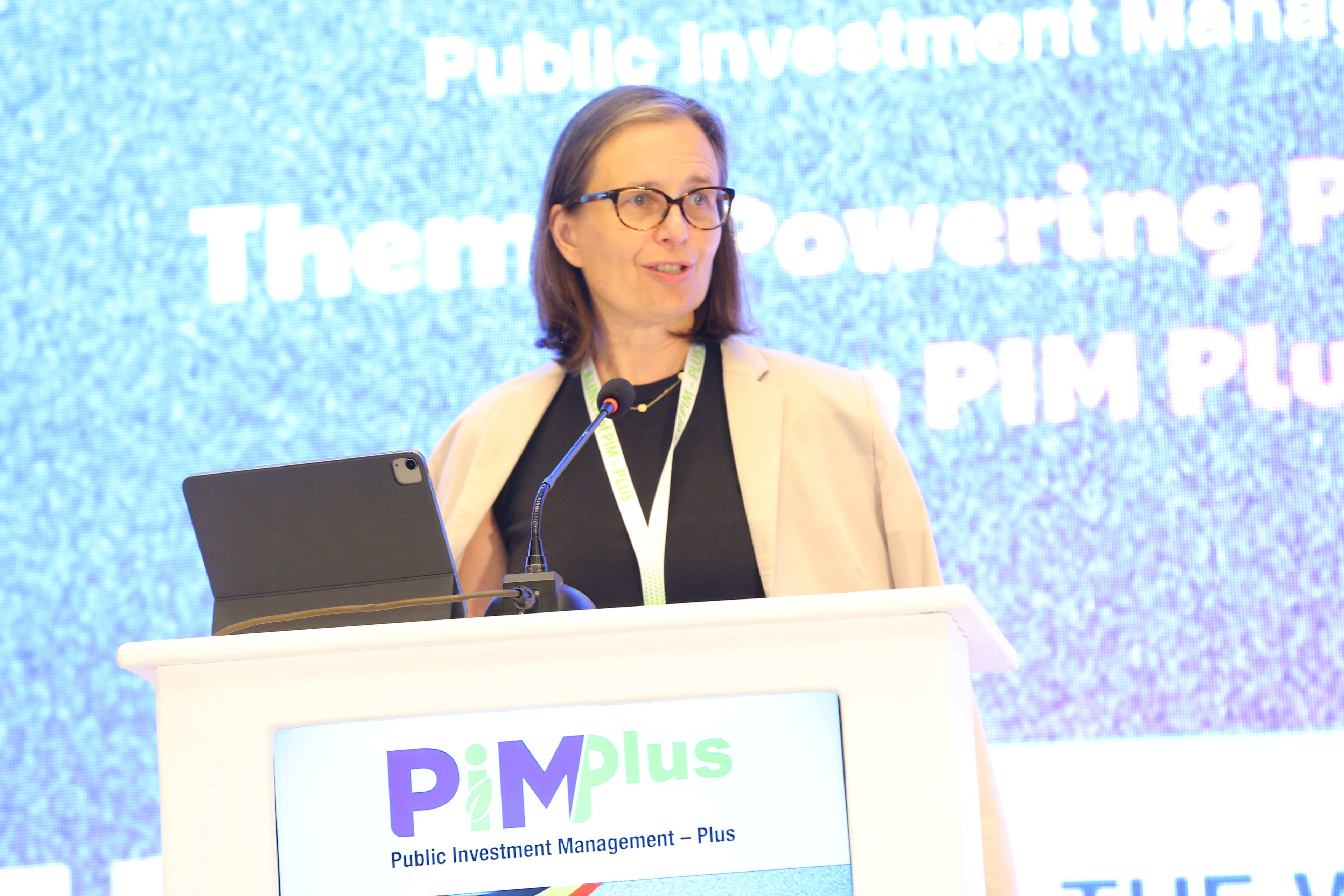
PIM PLUS field activity photo 1
PIM PLUS field activity photo 2
PIM PLUS field activity photo 3
PIM PLUS field activity photo 4
PIM PLUS field activity photo 5
PIM PLUS field activity photo 6
PIM PLUS field activity photo 7
PIM PLUS field activity photo 8

PIM PLUS – Uganda
Strengthening Public Investment and Asset Management for Growth and Resilient Operation

A World Bank–supported Operation strengthening the Government of Uganda’s efficiency, accountability, and sustainability in public investment and asset management, in line with NDP IV and the Tenfold Growth Strategy.

$200M
Total Operation
55%
PIP On-Time Target by 2031

What is Public Investment Management?

Public Investment Management (PIM) refers to the systems, processes, and institutions the Government uses to plan, allocate, implement, and oversee public investment projects to ensure value for money. These are typically long-term capital investments—schools, roads, hospitals, power plants, water and ICT infrastructure, among others.

In Uganda, PIM has been at the fore of Public Financial Management (PFM) reforms given its contribution to economic development. The Government recognizes the critical role of PIM in infrastructure development and the need to identify and implement projects that deliver an appropriate return on investment, with implementation monitored and lessons learned feeding into future projects.

The PIM PLUS Operation

The PIM PLUS Operation is a hybrid financing arrangement supported by the World Bank (IDA Credit 7917-UG), comprising Program-for-Results (PforR) and Investment Project Financing (IPF). Implementation is guided by the Operations Implementation Manual (OIM).

Component 1: Program-for-Results (PforR)

$160 million

Results-based financing tied to Disbursement-Linked Indicators (DLIs). Funds are released upon achievement and independent verification of agreed results. Disbursements support institutional reforms and selected strategic public investments aligned with NDP IV and the Tenfold Growth Strategy.

Component 2: Investment Project Financing (IPF)

$40 million

Sub-component 2A ($36M): Project Preparation Facility (PPF), hosted by the National Planning Authority (NPA), financing feasibility studies, detailed engineering designs, and environmental and social assessments for priority investment projects.

Sub-component 2B ($4M): Institutional strengthening and change management, including capacity building, policy and regulatory updates, and process improvements across participating MDAs.

The Public Investment Management Cycle

A comprehensive approach to managing public investments from conception to operation

The Public Investment Management Cycle 1. PROJECT IDENTIFICATION & PREPARATION 2. PROJECT APPRAISAL 3. PROJECT SELECTION & PRIORITIZATION 4. PROJECT BUDGETING 5. MONITORING & EVALUATION 6. PROJECT COMPLETION & HANDOVER 7. OPERATION & MAINTENANCE
1

Project Identification & Preparation

Identifying strategic projects aligned with national development goals and priorities, and developing comprehensive project proposals with feasibility studies and risk assessments.

2

Project Appraisal

Rigorous evaluation of project viability, costs, benefits, and climate resilience.

3

Project Selection & Prioritization

Strategic selection based on clear criteria ensuring optimal resource allocation.

4

Project Budgeting

Allocating resources efficiently to support project implementation phases.

5

Monitoring & Evaluation

Continuous tracking of progress, impact assessment, and learning for improvement.

6

Project Completion & Handover

Final handover ensuring deliverables meet quality standards and specifications.

7

Operation & Maintenance

Sustainable asset management ensuring long-term value and functionality.

Result Areas

Lead and supporting implementers for the Operation’s Disbursement-Linked Indicators (DLIs).

Result Area DLI Lead Implementer Other Implementers
Result Area 1: Improve resource mobilization, planning and budgeting, including sustainability and climate resilience DLI 1 MFPED (PAP) MFPED (BPED, ISSD, DARC, Cash Policy Depart)
DLI 2 MFPED (Tax Policy) URA
DLI 3 MoWE NEMA, NPA, MoLHUD, MFPED
Result Area 2: Project readiness strengthened, including resilience and sustainability DLI 4 MFPED (PAP) NEMA, MWE
DLI 5 NEMA MoGLSD, MoWE, MFPED (PAP, Gender Unit)
Result Area 3: Project execution strengthened and efficiency improved DLI 6 PPDA MFPED (PPMD)
DLI 7 MFPED (PAP) MFPED (BMAU), NPA, Internal Auditor General
DLI 8 MoMWE NEMA, MFPED (PAP)
Result Area 4: Asset management and maintenance strengthened DLI 9 MFPED (AMD) MFPED (AGO, PAP)
DLI 10 MoWT MFPED, MWE, NEMA
Abbreviations
Acronym Definition
PAPProject Analysis and Public Investments Department
BPEDBudget Planning and Evaluation Department
PPMDPublic Procurement and Management Department
ISSDInfrastructure & Social Services Department
DARCDevelopment Assistance & Regional Corporation
BMAUBudget Monitoring and Accountability Unit
AMDAsset Management Department
AGOAccountant General's Office
NPANational Planning Authority
NEMANational Environment Management Authority
MoWEMinistry of Water and Environment
MoWTMinistry of Works and Transport
MoGLSDMinistry of Gender, Labour and Social Development
MoLHUDMinistry of Lands, Housing and Urban Development
PPDAPublic Procurement and Disposal of Public Assets Authority
URAUganda Revenue Authority
OAGOffice of the Auditor General

Program Background

The PIM PLUS Operation supports the Government of Uganda’s efforts to strengthen public investment and asset management systems for improved efficiency, quality, and sustainability of public investments.

Program Development Objective (PDO)

The PDO is to strengthen the GoU's efficiency, accountability, and sustainability of public investment and asset management. Progress is measured through four PDO indicators with targets by 2031.

PIP projects progressing on time 32% (2025) → 55% by 2031
PIP projects with public progress reports 24% → 75%
Assets recorded, monitored & maintained 40% central govt; 10% LG infrastructure
Climate resilience funding +10% vs FY2027/28 (tagged allocations)

Governance and Oversight

The Operation builds on existing PFM reform governance: PEMCOM (Public Expenditure Management Committee) provides overall policy oversight; the Operation Steering Committee (OSC), chaired by the PS/ST of MoFPED, provides strategic guidance; and the Operation Technical Committee (OTC), chaired by the Director of Budget, manages technical and operational coordination. MoFPED leads implementation through the PAP Department and the Reform Coordination Unit (RCU).

Strategic Investment Focus

Resources earned from attainment of DLIs are prioritized for strategic investments in line with Uganda’s development agenda, including:

  • Selected drainage and sanitation within the Greater Kampala Metropolitan Area
  • Completion of stalled hospital infrastructure
  • Securing right of way for selected electricity transmission lines
  • Tourism infrastructure, including sanitation at tourism sites and stopovers on main highways
  • Strengthening revenue collection and Public Investment Management
Key Reference Documents

The OIM should be read alongside the Financing Agreement (IDA Credit 7917-UG), DFIL, PAD, ESCP, and ESSA. Documents can be accessed at finance.go.ug.

Rationale for the Operation

Uganda’s PIM system design is among the strongest in Sub-Saharan Africa; however, implementation challenges persisted, providing the rationale for the PIM PLUS Operation.

Key challenges include: system-wide implementation lags with cost and time overruns, arrears, and weak maintenance; fiscal and budgeting gaps (PIP entries exceeding fiscal space, over-commitment, counterpart funding shortfalls); project preparation weaknesses (many projects without quality feasibility work); environmental, social and gender gaps in preparation and ESIAs; limited climate integration in sector plans; procurement delays and contract management capacity constraints; and underfunded, unsystematic asset maintenance.

The Operation seeks to move from strong system design to more effective, results-oriented implementation across the full public investment lifecycle—planning and project preparation with climate resilience and environmental sustainability, timely implementation, and stronger post-completion asset management. The PAP Department at MoFPED supports PIM processes and coordinates the Operation with the RCU.

Key Reform Focus Areas

The Operation concentrates on strengthening resource mobilization and planning, enhancing project readiness, improving execution efficiency, and institutionalizing asset management across the PIM cycle.

1

Appraisal

Assess project viability, alignment with national priorities, and climate resilience.

2

Selection

Select projects based on clear criteria, prioritize them, and consider climate adaptation benefits.

3

Design

Develop detailed project designs that incorporate climate resilience and stakeholder engagement.

4

Procurement

Ensure transparent and competitive procurement processes.

5

Implementation

Deliver projects on time, within budget, and to required quality standards.

6

Operations and Maintenance

Ensure effective operations, plan for maintenance, and incorporate climate adaptation measures.

7

Asset Management

Manage assets effectively, monitor performance, and ensure climate resilience.

8

Monitoring and Evaluation

Track project progress, evaluate impact, and assess climate resilience and adaptation effectiveness.

Documents & Resources

Official publications, guidelines, and resources related to the PIM PLUS Operation and the Operations Implementation Manual (OIM).

Loading documents…

Get in Touch

📍

Location

Plot 2-8, Sir Apollo Kaggwa Road
P.O. Box 8147, Kampala, Uganda

📞
🌐

Website & Social

www.reap.go.ug
@REAP_PFM_Uganda

Ministry of Finance, Planning and Economic Development

Projects Analysis & Public Investment Department (PAP)